
Heavy-Duty Access Control for Public Facilities
Public facilities and other high-traffic buildings need access-control hardware selected for the opening, expected traffic, security risk, and approved life-safety design. A reader and electric lock are only part of the system. Reliable operation also depends on the door, frame, closer, exit hardware, sensors, power, wiring, controller, and programming.
Start with the complete door opening
Before choosing a lock, inspect the door and frame for alignment, wear, preload, damaged hinges, closer problems, and previous modifications. Electrifying a door that does not close and latch consistently will not correct the underlying mechanical problem.
For standard commercial openings, Avenger Security generally prefers a fail-secure electric strike, electrified lockset, or properly designed motorized latch-retraction device when suitable. These options can preserve security on loss of power while maintaining mechanically free egress from the occupied side. Magnetic locks are reserved for special approved configurations because their release, power, sensors, and life-safety interfaces require careful coordination.
Use hardware rated for the traffic and environment
- Locking hardware: Choose commercial-grade components matched to the door material, latch, frame profile, handing, traffic, and weather exposure.
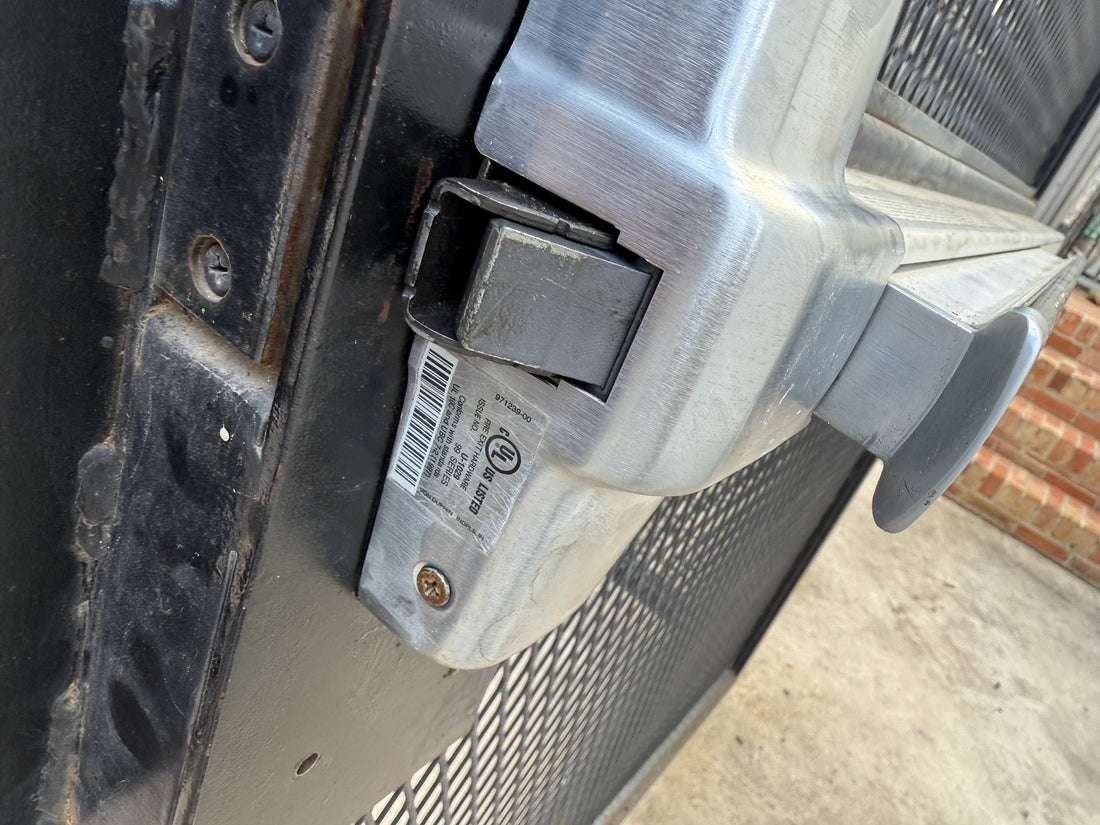
- Exit hardware: Use listed panic or fire-exit hardware where required by the approved door schedule and occupancy.
- Power: Size the listed power supply, wiring, and protection for normal load, inrush, distance, and any required backup.
- Controller and reader: Place equipment where it can be serviced and protect network, cabinet, and credential administration.
- Door closer and hinges: Verify that the door closes, latches, and does not bind against the locking hardware.
Door position and request-to-exit sensing
A door position switch confirms whether the door is open or closed. When paired with controller logic, it can support forced-door and door-held-open events, relock-on-close behavior, and a more useful audit trail.
A request-to-exit device records or suppresses an authorized egress event. It should not be treated as the sole method of unlocking a door that already provides mechanically free egress. The inside lever, panic bar, or approved exit hardware must release the door as designed even if the access-control system is unavailable.
Fail-secure and fail-safe are door-by-door decisions
Fail-secure hardware remains secure from the entry side when power is removed while still allowing approved mechanical egress. Fail-safe hardware unlocks when power is removed. The correct behavior depends on the opening, occupancy, fire alarm interface, approved plans, and authority having jurisdiction.
Do not apply one rule to every door in a facility. Stair doors, perimeter doors, controlled-egress openings, fire-rated assemblies, and interior office doors can have different requirements.
Programming and reporting
- Assign individual credentials instead of shared access codes.
- Use roles and schedules for staff, vendors, and after-hours access.
- Configure forced-door and held-open alerts with practical time limits.
- Review door position, access granted, access denied, and administrative changes.
- Use dual credentials or credential-plus-PIN where the approved risk assessment calls for stronger verification.
- Document who receives alerts and what action they should take.
Plan for service and turnover
A complete turnover package should identify the lock and exit hardware, power supply, controller, reader, door position switch, request-to-exit function, fire alarm interface where applicable, network requirements, credential process, and response settings. Test normal entry, free egress, forced and held conditions, power-loss behavior, and approved emergency interfaces.
For more design context, see our access control and electric lock guide or review commercial access-control cost factors.
Avenger Security can assess high-traffic openings for Austin-area schools, public facilities, offices, and commercial properties. Final hardware and programming should follow the approved plans, manufacturer instructions, and authority having jurisdiction.